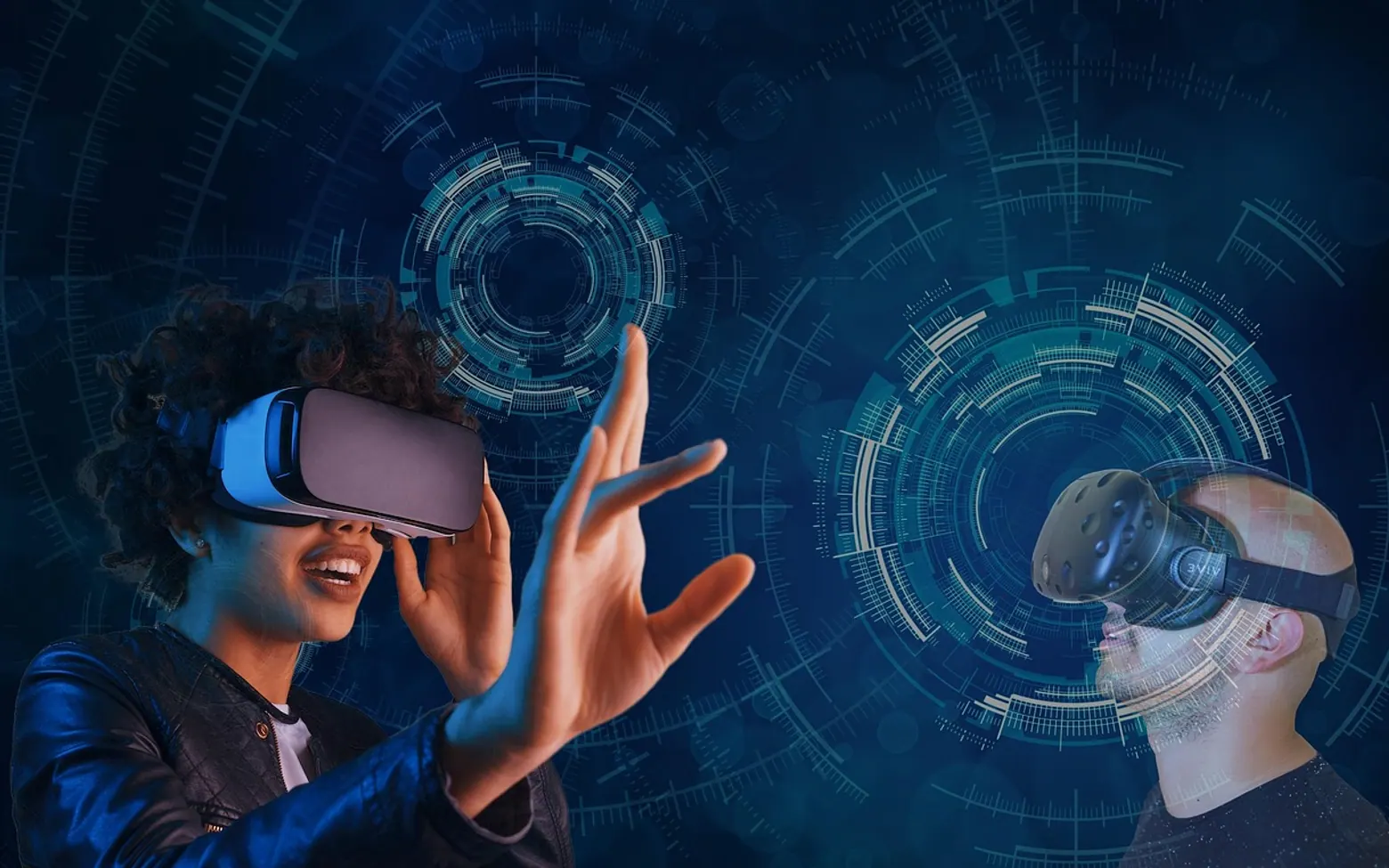
Virtual Gaming
How games moved from flat screens to headsets, what makes virtual reality feel convincing, and how it differs from augmented reality for players at home.
For a long time, playing a game meant looking at a window into another world. Early titles were flat sprites moving left and right, then polygons gave those worlds depth, and eventually designers began asking whether the window could disappear entirely. Virtual reality is the answer they have been working towards: a game world that surrounds the player instead of sitting in front of them.
From pixels to presence
The jump from two dimensions to three changed how video games were built and played, adding cameras, perspective and free movement. Virtual reality takes that idea a step further. Software builds a three-dimensional space around the player, tracks where their head and hands are, and redraws the scene so that turning to look over a shoulder works just as it would in a real room.
The goal is a feeling often called presence, the moment when the brain stops treating the scene as a picture and starts treating it as a place.
A long road to the living room
The idea is older than many players assume. Game developers experimented with head-mounted displays and immersive cabinets decades ago, but the hardware was bulky, expensive and limited by the graphics power of its time. Those early attempts showed what might be possible without being comfortable enough for everyday play.
Better displays, lighter optics and more capable graphics chips gradually changed that. Headsets became something a player could set up at home, connected to a gaming PC or console, or even running on their own.
What makes VR feel convincing
- Tracking. Head and hand movement must be followed accurately so the world stays steady as the player moves.
- Smooth frame rates. Stutter that would be a minor annoyance on a monitor can feel disorienting inside a headset.
- Natural interaction. Reaching out to grab, throw or push objects feels more immersive than pressing a button.
- Sound. Spatial audio helps players locate things around them without looking.
Over the years a range of devices, from phone-based viewers to dedicated console and PC headsets, have given players different entry points depending on budget and how deep they want to go.
Virtual reality versus augmented reality
People confuse the two terms all the time. Augmented reality keeps the real environment in view and layers digital objects on top of it, as seen in location-based mobile games that place creatures on a real street. Virtual reality replaces the surroundings completely, so the player sees only the game world. That freedom from physical surroundings is what lets VR designers build spaces of any size or style.
Where virtual gaming is heading
More titles are now designed for headsets from the start rather than adapted from flat-screen versions, which tends to produce better experiences. Comfort, price and the size of the game library remain the main factors for anyone deciding whether to try it. For players who enjoy feeling inside a world rather than watching it, virtual gaming continues to be one of the most interesting directions the medium has taken.