Air Fryer vs Convection Oven: What Actually Differs
Air fryer or convection oven? Both cook with fans and hot air, but size, speed, crispness, capacity and cleaning differ. A plain comparison for your kitchen.
Walk down any appliance aisle and you will find air fryers stacked beside countertop ovens that also promise convection cooking, and some boxes that claim to be both. It is easy to wonder whether an air fryer is just a small convection oven with clever branding. The honest answer is: mostly yes, with a few differences that matter a lot in daily use.
The shared idea: moving hot air
A conventional oven heats the air in a box and lets it sit. A convection oven adds a fan that circulates that hot air, which strips away the cooler layer of air that clings to food. The result is more even browning and often shorter cooking times than a still oven.
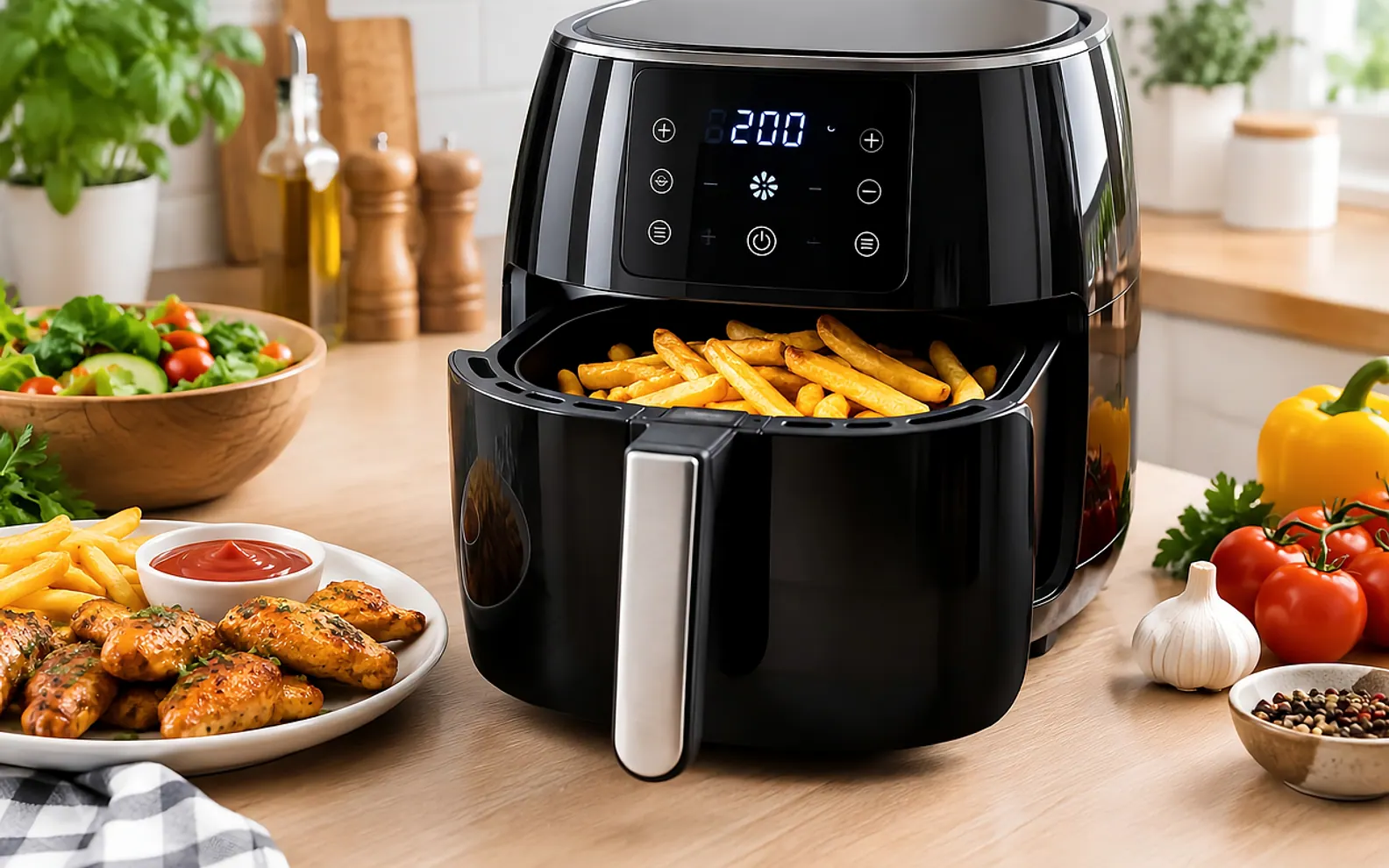
An air fryer does the same thing in a much smaller chamber, with a powerful fan placed close to the food. Despite the name, it does not fry. It roasts and crisps with fast-moving heat, usually needing only a little oil, or none.
Where they differ
| Feature | Air fryer | Convection oven |
|---|---|---|
| Size | Compact, fits on most counters | Countertop models are larger; built-in models replace a regular oven |
| Capacity | Suits one or two portions at a time | Trays, roasting tins and whole dishes for a family |
| Preheating | Short or none | Usually needs time to come up to temperature |
| Crispness | Very strong on small items such as chips and wings | Good, slightly gentler, more even across a large tray |
| Baking | Possible for small batches, but the fan can dry the tops | Better for cakes, bread, casseroles and anything in a dish |
| Cleaning | Basket and tray, often dishwasher-safe | Racks, trays and interior walls |
What each one does best
Air fryer strengths
- Reheating leftovers such as pizza or roast potatoes without turning them soggy.
- Frozen snacks, small batches of vegetables and quick proteins for one or two people.
- Keeping the kitchen cooler in summer, since only a small space is heated.
Convection oven strengths
- Sheet-pan dinners, whole chickens, large roasts and trays of biscuits.
- Baking where even, gentle heat matters more than intense crisping.
- Cooking several dishes at once for a family or guests.
Noise, heat and counter space
Day-to-day comfort is easy to overlook in a showroom. An air fryer's fan is close to the food and runs hard, so it hums noticeably while it works; some models are quieter than others, and reviews that mention noise are worth reading. A countertop convection oven gives off more heat into the room simply because it is bigger, while a built-in oven keeps its warmth behind the cabinet front. Think also about where the appliance will live between meals. A machine that has to be lifted out of a cupboard every time tends to be used less than one that stays within reach, so measure the spot, including the clearance the manual asks for above and behind it.
Adjusting recipes between them
Recipes written for a conventional oven often need adapting for either appliance. Common advice is to lower the temperature somewhat or check the food earlier, but the right adjustment varies between models, so the manufacturer's manual is the best starting point. A few habits help in both:
- Do not overcrowd the basket or tray; air has to reach every surface.
- Shake the basket or turn food halfway through for even colour.
- Use a food thermometer for meat and poultry rather than relying on time alone.
- Keep vents clear and leave space around the appliance as the instructions direct.
Cleaning and upkeep
Grease builds up quickly in both. Let the appliance cool completely, wash removable parts in warm soapy water and wipe the interior with a damp cloth. Avoid abrasive pads on non-stick coatings. Small-appliance care follows the same logic everywhere in the kitchen, and our guide to maintaining a ravioli maker shows how much regular attention extends a machine's working life.
Which should you buy?
If you cook mostly for one or two people, like crispy food and have limited counter space, an air fryer is a practical, fast addition. If you regularly feed a household, bake or cook in dishes, a convection oven, built-in or countertop, will do more. Many kitchens end up with both: the oven for the main meal and the air fryer for sides and reheating. Just as with a new bread machine, the first few weeks of experimenting teach you more than any spec sheet.